 Frelixor

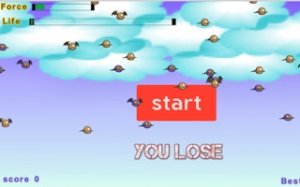
Feathered Flight Target Practice keeps its scope narrow: aim, charge, release, and avoid missing. That simplicity is the main strength, because the difficulty comes from faster birds and larger groups rather than from complex systems. The family-friendly presentation and browser-based access make it easy to recommend for players who want a quick precision challenge. The limitation is equally clear: with a single-miss rule and no described multiplayer or campaign, it works best as a short-session game rather than a long-term commitment.
Feathered Flight Target Practice uses a single-input control scheme: click and hold to draw the bowstring, then release to fire. The longer you hold, the farther and faster the arrow travels. That charging mechanic is the only variable you control besides aim, so every shot becomes a quick judgment about distance and bird speed. The game gives immediate feedback on each shot, which helps you calibrate how much charge a given target needs. Because missing a single bird ends the round, the pressure comes from deciding when a shot is ready rather than from managing a resource or health bar.
Each round introduces more birds and faster movement. When several targets are on screen, you cannot simply react to the nearest one. You have to judge which bird is closest to crossing your position and whether you have time to charge a full shot or need to release early. That prioritization is the real skill the game tests, and it becomes more demanding as the screen fills up. The difficulty curve is gradual rather than sudden, so the challenge grows in step with your ability to read target speed and spacing.
The clean, non-distracting visual style keeps attention on target identification. There are no cluttered backgrounds or unnecessary effects competing with the birds, which matters in a game where a fraction of a second decides whether a shot lands. The game runs instantly in a browser with no downloads or registration, and the point-and-click controls work with either a mouse or a touchscreen. That combination makes it accessible to players of all ages and skill levels, including families looking for a quick coordination challenge.
A scoring system tracks progress and performance across attempts. Because a single miss ends the round, scores tend to reflect consistency rather than one lucky streak. The game is designed for short sessions, so you can play a few rounds, note where your aim drifted, and try again without a long setup. That structure suits players who want a focused hand-eye coordination exercise rather than a lengthy campaign.
Sign in to comment
You must be logged in before posting a review or rating.
No comments yet. Be the first to comment!






Editorial Notes