 Frelixor
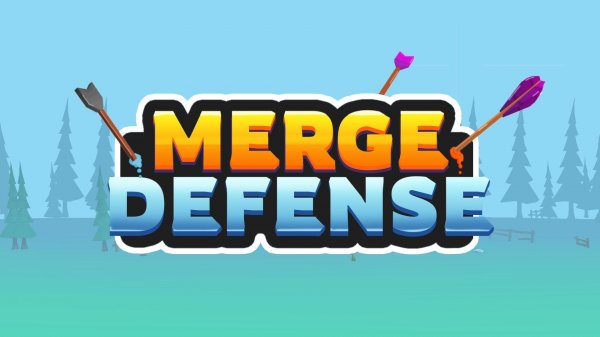
Merge Defense Strategy works because it makes merging a genuine decision rather than a cosmetic upgrade path. Combining two units into one stronger defender forces you to weigh board coverage against concentrated power, and enemy waves with unique abilities keep that calculation shifting. The browser and Android release makes it easy to pick up for short sessions. The limitation is that the input describes only the core loop, so players seeking deep progression systems or narrative context may find it lean.
Merge Defense Strategy casts you as humanity's last protector. Your job is simple to state and hard to sustain: keep enemies from breaking through by placing defenders, then improving those defenders through merging. You select units with the left mouse button, drag identical ones together, and the pair becomes a stronger version. That single action—combine, upgrade, reposition—drives every decision you make.
Merging looks like a matching puzzle, but it functions as resource management under pressure. Every merge consumes two units to produce one, so you trade board coverage for concentrated power. When a wave arrives that your current lineup can't handle, you have to decide whether to merge now and accept a thinner front, or hold units apart and risk being overwhelmed. Enemy types carry special abilities, so the correct merge target changes from wave to wave rather than following one fixed build order.
The game repeatedly tests whether you can split attention between pushing damage and absorbing it. Merged units are stronger, but they also represent a bigger investment—losing one hurts more than losing a basic unit. Players who merge everything immediately often find themselves without enough bodies to cover multiple approach lanes. Players who hoard units stall out against tougher waves. The middle path, merging just enough to counter the current threat, is where the tactical layer lives.
Merge Defense Strategy is developed by Playnoob and available on web browsers and Android devices. Sessions are built around short waves, which suits quick play on a phone or a browser tab. The action-strategy pacing means decisions happen fast, but the underlying logic—match, upgrade, deploy, observe—stays readable, so new players can learn the loop without a long tutorial.
Sign in to comment
You must be logged in before posting a review or rating.
No comments yet. Be the first to comment!










Editorial Notes