 Frelixor
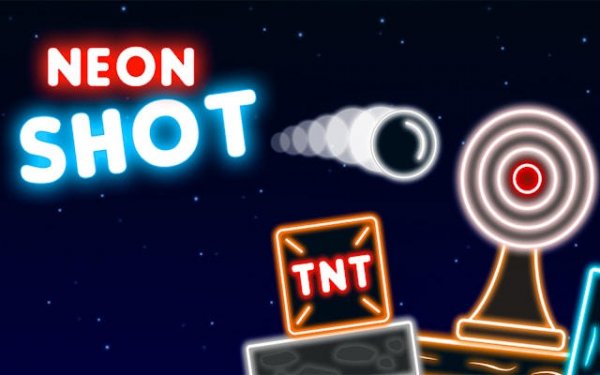
Glow Rebound leans on a single strong idea: every shot is a small physics problem you solve before releasing the sphere. The neon stages keep targets readable, chain-reaction boxes add a layer of ordering strategy, and leftover-sphere scoring pushes toward efficient clears rather than brute force. The gentle difficulty curve suits short sessions, though later layouts demand precise aim. Best for players who enjoy planning a route and retrying until it works.
Glow Rebound gives you a flexible launcher and one job: send a glowing sphere into a stage full of markers. Pulling back sets both the direction and the force of the shot, and releasing commits the sphere to a path that bounces off surfaces. The real test is anticipating how each impact changes the sphere's route. A steady hand matters, but so does thinking a step ahead before you let go.
Each stage arranges glowing markers and barriers in a distinct layout. The neon look is not just style: the contrast between lit targets and dark surfaces makes it easier to trace angles and plan a route. Early layouts are open enough to learn the bounce behavior. Later ones become more intricate, adding new angles and demanding more creative solutions from the same basic controls.
Special boxes sit inside levels and detonate when hit, setting off a series of explosions that clear several markers at once. Because your sphere supply is limited, deciding which box to strike first is the difference between an efficient clear and a wasted attempt. The order you trigger these boxes shapes the whole run, so scouting the layout before your first shot pays off.
Finishing a stage with spheres left over raises your score, which pushes you toward the most efficient path rather than a bare completion. Restarting is always available and carries no penalty, so experimenting with different angles and box orders costs nothing but time. That loop of try, adjust, and retry is where most of the game's replay value sits.
The controls are simple enough to pick up in a minute, which suits short breaks as well as longer sessions. A gradual difficulty curve lets newcomers enjoy the opening levels while experienced players get tougher puzzles later. The balance keeps the challenge engaging without tipping into frustration, though the later stages clearly expect precise aim and planning.
Sign in to comment
You must be logged in before posting a review or rating.
No comments yet. Be the first to comment!





Editorial Notes