 Frelixor
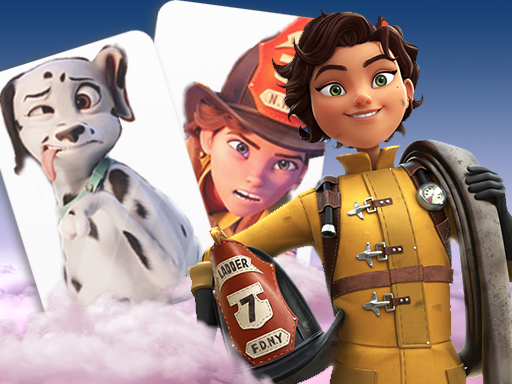
Fireheart Card Match Puzzle sticks to one mechanic and does it without clutter. The board is cleared by matching pairs, and the move and time counters give each round a measurable goal. Artwork from the Fireheart film provides the visual theme, while the lack of reading requirements and the browser-based controls make it usable across ages and devices. The main limitation is variety: there is no story, progression system, or online play, so its appeal depends on whether you enjoy repeated memory challenges.
Fireheart Card Match Puzzle is a memory game built around a single task: clear the board by finding every matching pair of cards. Each card shows an image drawn from the Fireheart animated film. Players flip one card, then a second. If the images match, both stay face-up. If they do not, both flip back over. The game keeps a running count of moves and time, so each round produces a score you can try to improve.
The challenge comes from the board itself. Because every card looks identical from the back, the only way to progress is to remember which image sits where. A mismatch is not a failure; it is information. The more cards you flip, the more of the board you can map in your head. Players who flip in a consistent order, such as left to right or top to bottom, tend to build that mental map faster than those who tap randomly. The move counter and timer make this visible: fewer moves and shorter times usually mean better recall, not luck.
The controls are limited to selecting cards. A tap on a touchscreen or a click with a mouse reveals a card, and the same action selects the second card. No reading is required, which makes the game usable by young children and by anyone who prefers a simple interface. The game works in a browser on computers, tablets, and phones, and it does not require downloads or purchases. Because the theme is non-violent and the artwork comes from a family film, the content stays appropriate for all ages.
The game supports solo play and family challenges. In solo play, the move and time counters act as a personal benchmark. In a family setting, players can compare scores or take turns on the same board. The game does not include a story mode, character progression, or online multiplayer; its value comes from repeated attempts at the same memory task and from the artwork that ties each round to the Fireheart film.
Sign in to comment
You must be logged in before posting a review or rating.
No comments yet. Be the first to comment!

Editorial Notes