Matching Under Pressure
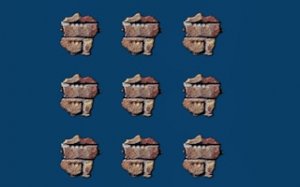
Every round begins with a single image displayed on screen. Your job is to identify that image and move your character to the corresponding area of the arena before anyone else. The arena is a shared space, so the race is not just about speed—it is about reading the layout and choosing a route that keeps you away from the edges while still arriving quickly. Because the target changes each round, you cannot rely on memorizing one spot. Instead, you build a mental map of where each image sits and learn to scan the arena in the first second after the prompt appears. Players who hesitate or commit to the wrong direction lose precious time, and in a crowded match, that gap is often enough to decide the round.
Nudging, Edges, and Survival
While you run, you can gently nudge nearby rivals to throw them off balance. This is not a combat mechanic—it is a positional tool. A well-timed nudge can slow an opponent just enough to let you reach the matching area first, but it also leaves you vulnerable if you overextend. The arena has edges, and falling off removes you from the round. That risk cuts both ways: you can push someone toward the boundary, but the same thing can happen to you if you are not careful with your own momentum. The last player standing wins, so survival matters as much as matching speed. In practice, this means the final moments of a round often come down to two or three players circling the same area, each waiting for the others to make a mistake near the edge.
Built for Short, Social Sessions
Matches are designed to be quick, which makes Party Match easy to fit into short breaks. The controls are simple enough that new players can join without a lengthy tutorial, yet the combination of observation, movement, and nudging gives experienced players room to refine their timing. The visual style is bright and colorful, and the game avoids violence or mature themes, so it works as a family-friendly option. Because the core loop depends on other players, the experience is at its best when the arena is full. Empty or low-population matches reduce the social pressure that makes the nudging and racing interesting, so playing during busier hours generally leads to more competitive rounds.
Reading the Arena, Not Just the Image
Improvement in Party Match comes from two habits. First, watch the image the moment it appears and commit to a direction without second-guessing. Second, track where other players are heading—if a cluster forms around one area, you may need to approach from a different angle or prepare to nudge through traffic. Staying near the center gives you more escape routes, while hugging the edge saves distance but increases fall risk. There is no single best position; the right choice depends on where the target is and how crowded the surrounding space becomes. Regular play sharpens both reaction time and pattern recognition, which are the two skills the game rewards most.
Compatibility
This H5 game runs smoothly on:
• Desktop computers (Windows / Mac) • Mobile phones (iPhone / Android)
• Tablets (iPad / Android)
🌐 Best experienced with Chrome, Safari, or Edge
 Frelixor




Editorial Notes