 Frelixor
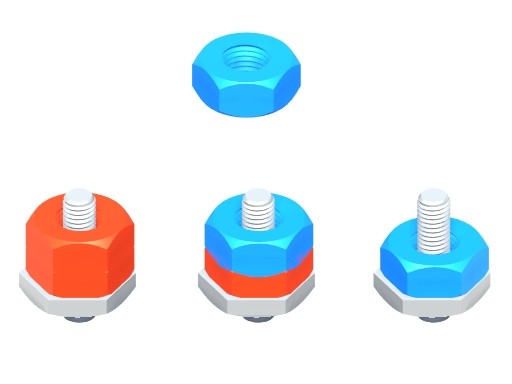
Screw Puzzle: Brain Teaser stands out for its straightforward premise: unscrew metal pieces in the right order. The challenge comes from dependencies between bolts, nuts, and rings, which forces you to think before tapping. Its gradual difficulty curve and hint system make it accessible, while the lack of time pressure keeps it relaxing. Best for players who enjoy logic puzzles and want a break from fast-paced action.
Screw Puzzle: Brain Teaser builds its gameplay around a simple but demanding task: removing bolts, nuts, and rings from iron panels. Each level presents a tangled arrangement of these metal pieces. Your goal is to clear the board by unscrewing every element in the correct order. Because some pieces are locked or depend on others, you must study the layout before making a move. The game rewards patience over speed, and every solved puzzle feels like a small victory of logic.
Success depends on spotting which bolt or ring is free to remove first. Tap or click on a piece to unscrew it, but if another part blocks it, nothing happens. This creates a chain of dependencies: freeing one piece may unlock two more. The challenge grows as levels introduce denser clusters and more interlocking parts. Hints are available if you get stuck, but using them too often removes the satisfaction of solving the puzzle yourself. The best approach is to observe the whole panel, identify the outermost pieces, and work inward.
The game keeps its content clean and its controls simple, making it suitable for children and adults alike. There is no time pressure, so you can think through each move. Levels increase in complexity gradually, so new players can learn the mechanics without frustration. Short sessions work well because each puzzle can be completed in a few minutes, yet the later stages may take longer as the arrangements become more intricate. It is a calm, focused experience rather than a frantic one.
Every puzzle in Screw Puzzle: Brain Teaser is a lesson in sequencing. You learn to recognize patterns: which shapes tend to block others, how rings interact with bolts, and when to remove a piece even if it seems unimportant. This kind of practice strengthens planning and spatial reasoning. The game does not rely on reflexes or luck; it asks you to think ahead. That makes it a good choice for players who enjoy traditional brain teasers and want a fresh mechanical twist on the genre.
Sign in to comment
You must be logged in before posting a review or rating.
No comments yet. Be the first to comment!







Editorial Notes