 Frelixor
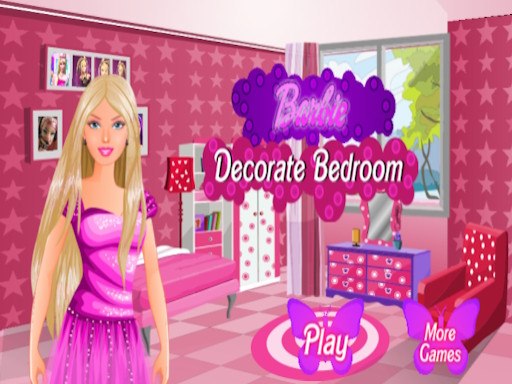
Barbie Room Design Studio works because it removes almost every pressure found in arcade games. There is no timer, no score, and no way to fail, so the only feedback loop is the player's own judgment about whether the room looks right. The object buttons and color palette give enough range to produce genuinely different bedrooms from the same starting point, and the ability to move or remove anything at any time keeps experimentation cheap. Its limitation is the same as its strength: without goals or progression, players who need direction may lose interest quickly. It fits kids and casual players who enjoy arranging and color-matching for its own sake.
Barbie Room Design Studio hands players an empty bedroom and a set of creation buttons lined up on the left side of the screen. Each button produces a different object, such as a bed, a table, a lamp, or a decorative piece. Clicking a button selects the object, and clicking anywhere in the room places it there. The starting point is deliberately blank, so the first decision is always about what belongs in the space and where it should sit.
A color palette sits alongside the object buttons, and it applies to whatever item is being placed. Players can match colors across furniture for a unified look or set contrasting tones to make specific pieces stand out. Because color and placement are separate decisions, the same set of objects can produce very different rooms. A pastel scheme reads differently from a bright one, even when the furniture arrangement stays identical.
Nothing in the game locks into place permanently. Items can be moved or removed at any point, and there is no confirmation step or cost attached to changing a decision. That freedom matters for how players approach the room: they can place a large piece like the bed first, see how it feels, and then build smaller items around it. If the layout looks unbalanced, the fix is simply to drag things around until it does not.
The design is aimed at kids and at anyone who enjoys interior arranging as a low-pressure activity. There are no timers, no scores, and no failure states, so progress depends entirely on the player's own satisfaction with the room. The controls stay simple enough for young players to operate without help, and the absence of rules means sessions can last as long as interest holds.
Sign in to comment
You must be logged in before posting a review or rating.
No comments yet. Be the first to comment!











Editorial Notes