 Frelixor
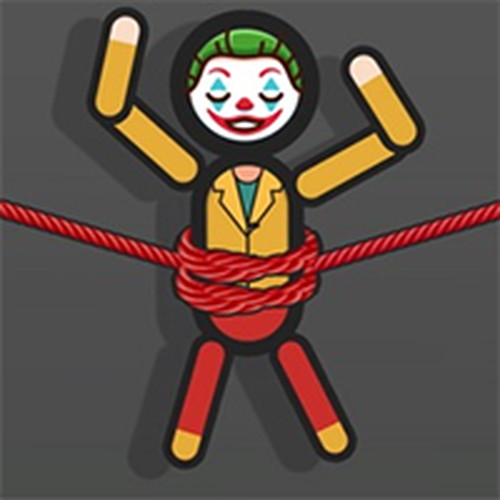
Boss Rope Puzzle Challenge delivers a focused puzzle experience built around one clear idea: freeing a boss by interacting with ropes in the right order. The game avoids timers and reflex demands, instead asking players to observe, plan, and accept that a wrong move can complicate the board. Its colorful presentation and browser-based access lower the barrier to entry, while the steady increase in complexity gives puzzle enthusiasts something to sink into. The main limitation is that the core loop stays consistent throughout—players who want variety in mechanics may find it narrow. Still, for anyone who enjoys logic puzzles and methodical problem-solving, it offers a straightforward and replayable challenge.
Every level in Boss Rope Puzzle Challenge places your boss in a bind held by multiple ropes. Your only tool is the ability to interact with those ropes—typically by clicking or tapping—and the order in which you do so determines whether the boss goes free or the situation gets worse. There are no timers forcing your hand, so the real pressure comes from thinking ahead. A wrong sequence can create new complications, which means each move is a small commitment.
The opening puzzles are deliberately simple, giving you room to learn how ropes respond to your input. As you advance, the arrangements grow more tangled: more ropes, less obvious starting points, and sequences that punish guesswork. The game never explains the solution outright; instead, it relies on your ability to spot patterns and predict consequences. That steady ramp keeps the experience approachable for casual players while still offering enough resistance for dedicated puzzle fans.
Because Boss Rope Puzzle Challenge runs entirely in a web browser, there is nothing to install. It works with a mouse on desktop or a touch screen on tablets and phones, and the controls stay consistent across devices. The colorful presentation keeps the mood light even when a puzzle stalls you, and the free-to-play model means you can revisit levels as often as you like to refine your approach.
When a sequence refuses to click, step back and study the full arrangement before touching anything. Look for ropes that clearly constrain others and consider what happens if you leave them for last. Rushing tends to create the exact knots you are trying to avoid. Repeated attempts are part of the design—each failure reveals something about how the ropes interact, and that knowledge carries into later levels.
Sign in to comment
You must be logged in before posting a review or rating.
No comments yet. Be the first to comment!







Editorial Notes