 Frelixor
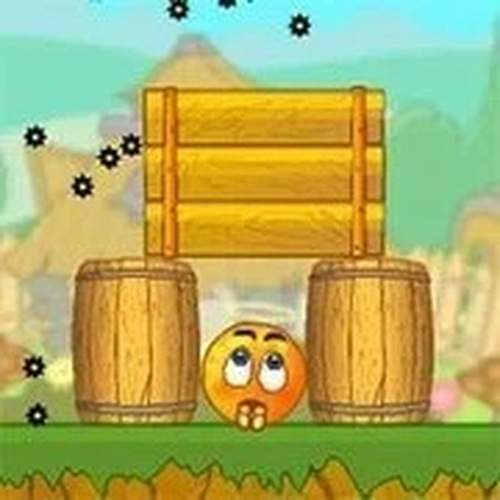
Orange Shelter Logic Puzzle delivers a focused spatial reasoning challenge: place limited objects so every orange stays dry when rain falls. The gradual difficulty curve and family-friendly presentation suit younger players and casual solvers, while later levels offer genuine depth. The level editor stands out, letting players design and share puzzles, which adds lasting value. The main limitation is the absence of detail about online sharing or additional modes beyond the core puzzle and editor.
Orange Shelter Logic Puzzle asks a simple question: can you keep a group of smiling oranges dry when rain falls from a dark cloud? Each level presents a play area dotted with oranges and a limited toolbox containing planks, wheels, umbrellas, and other objects. Your task is to position these items so that every orange stays completely covered once the storm begins. The rain arrives after you finish arranging, so there is no mid-level adjustment—your plan must hold from the start.
Players drag objects from the toolbox onto the play area and click to rotate them. Because each level supplies only a fixed set of items, every placement matters. A plank might shield two oranges if angled correctly, while an umbrella could cover a single orange from above. Wheels and other objects behave according to their shape and orientation, so spatial reasoning drives success. When you are satisfied, the rain falls; if any orange remains exposed, the level is not complete.
The game includes more than 60 levels that gradually increase in difficulty. Early puzzles introduce basic object placement, while later ones demand careful planning and creative thinking. The gentle learning curve makes the game accessible to younger players, yet the later challenges still offer depth for experienced puzzle solvers. Because the rain always falls after placement, you can study the layout and think through the physics before committing.
A level editor lets you build custom puzzles by choosing backgrounds, placing oranges, and selecting which objects other players can use. You can save and share these creations, adding lasting replay value and fostering a community of puzzle creators. Designing levels also deepens your understanding of how objects interact with rain, which can improve your performance in the main game.
Before placing anything, study the level layout and consider where rain might collect. Experiment with different object placements if your first attempt fails. Replaying earlier levels can reveal more efficient solutions and sharpen your strategies. The level editor doubles as a practice tool: building your own puzzles forces you to think about coverage from the rain's perspective.
Sign in to comment
You must be logged in before posting a review or rating.
No comments yet. Be the first to comment!







Editorial Notes