 Frelixor
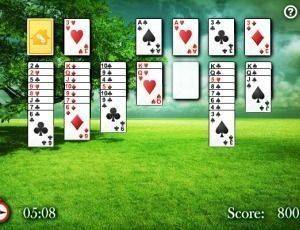
Australian Patience Solitaire stands out for its straightforward rules and the steady mental challenge of sorting cards across seven columns. The alternating-color sequence rule and the need to uncover face-down cards create meaningful decisions without overwhelming complexity. It suits players who want a quiet, strategic break rather than a fast-paced game. The main limitation is the lack of multiplayer or varied modes, but for a solo card puzzle, that focus is part of its appeal.
Australian Patience Solitaire deals cards into seven columns: the first column holds one card, the second holds two, and so on, with only the top card of each column face up. Your task is to rearrange these cards so that every suit ends up in its own foundation pile, ordered from Ace through King. The layout changes with each new deal, so no two sessions follow the same sequence of decisions.
Within the tableau, you move cards between columns to form descending sequences that alternate between red and black suits. A face-down card becomes available only when the cards above it are cleared away, which means early moves often determine how many options you have later. A stock pile provides additional cards when the tableau offers no productive moves, but drawing from it is not unlimited in effect—each draw changes the available choices.
Because Australian Patience Solitaire is played by one person, there is no time pressure from an opponent. Instead, the challenge comes from anticipating how a move will affect future possibilities. Uncovering face-down cards early tends to create more room to maneuver, while careless sequencing can block a column. The game rewards patience and careful observation rather than speed, making it suitable for players who prefer a quiet, methodical puzzle.
The rules are simple enough for newcomers to card games, yet the need to plan several moves ahead gives experienced solitaire players something to think about. Its calm pace and lack of complex setup make it a reasonable choice for short breaks or longer sessions. The game does not include multiplayer or timed modes; it is strictly a solo activity focused on sorting and strategy.
Sign in to comment
You must be logged in before posting a review or rating.
No comments yet. Be the first to comment!










Editorial Notes