 Frelixor
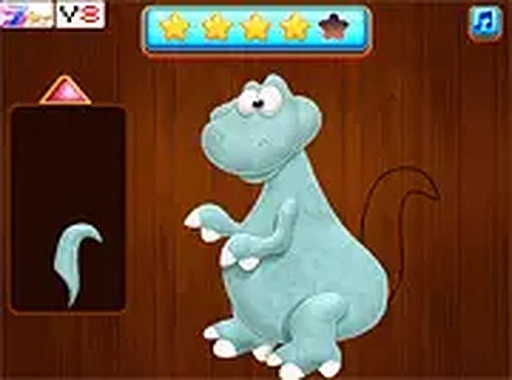
Dinosaur Tile Match Quest is a straightforward drag-and-drop puzzle that asks players to complete dinosaur pictures by placing tiles in the correct spots. Its strengths are accessibility and a relaxed pace: no timers, no scores, and no downloads. The gradual difficulty curve supports younger players. The main limitation is that the input describes no additional modes, characters, or progression beyond new boards, so players seeking variety or challenge may find it simple.
Each puzzle board starts as a partially assembled patchwork of colorful tiles. Every tile has a unique pattern that fits one specific spot. Players click or tap a tile, then drag it to the correct position. The goal is to complete the picture by placing every piece. The game relies on shape and color recognition rather than instructions, so the first move is usually obvious once the board appears. There is no time limit and no scoring system, which means a wrong placement costs nothing but a moment.
Bright, friendly dinosaur characters appear on each board. Tiles have soft edges and vibrant colors, which makes individual pieces easy to tell apart. The background stays calm and uncluttered, so visual distractions are minimal. A full-screen option is available for larger screens, which can help players focus on the puzzle without browser interface elements nearby. The overall look is inviting rather than intimidating, and that matters during longer play sessions when concentration can fade.
Controls are simple: click or tap a tile, then drag it to the desired location. The interface responds quickly to both touch and mouse input, so the game works on smartphones, tablets, and computers. No downloads or installations are required because it runs directly in a web browser. That makes it easy to open on any device with an internet connection, and it also means there is no setup step before playing. The mechanics are intuitive enough that most players can start without reading instructions.
As players complete puzzles, new boards become available with slightly more complex arrangements. Early levels use fewer tiles and simpler patterns. Later stages introduce additional pieces and more intricate designs. This gradual increase in difficulty helps build confidence and problem-solving skills over time. Because the game does not include timers or penalties, players can take as long as they need to finish each puzzle, which keeps the focus on observation and logic rather than speed.
Sign in to comment
You must be logged in before posting a review or rating.
No comments yet. Be the first to comment!










Editorial Notes