 Frelixor
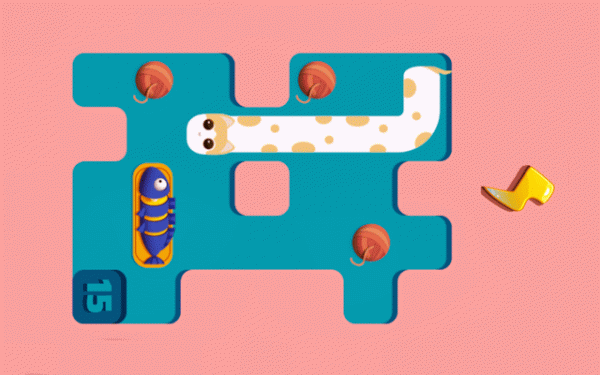
Stretch Cat Step Puzzle stands out for enforcing a precise step count rather than a simple path to the goal. That single rule turns block arrangement into a genuine planning exercise, and the gradual introduction of moving walls, one-use blocks, and disappearing platforms keeps the difficulty curve steady. The lack of timers and the undo option make failure low-stakes, which supports experimentation. Its main limitation is that the concept will not appeal to players seeking action or narrative.
Stretch Cat Step Puzzle is built around a single, unyielding rule: the number printed on the goal tile is the exact number of steps the cat must take to reach it. You never steer the cat yourself. Instead, you rearrange the grid by shifting blocks, extending platforms, and removing obstacles until the route you have created matches that count. A path that is one step too long or too short fails, so every block you move has a measurable consequence.
Each stage places the cat on one tile and the goal on another. The cat advances one tile at a time along the route you construct, and its body stretches visually as it moves, giving a clear read on how far it has traveled. Because the required step count is fixed, you cannot simply clear a straight line to the goal. You have to think about the sequence of your block moves, since some tiles shift only after the cat has passed over them, and others vanish once used.
Early puzzles keep routes short and readable, but the game gradually layers in complications. Moving walls force you to time your rearrangements around the cat's position. Gaps demand that you bridge them with the right platform before the cat arrives. Blocks that can only be moved once punish careless placement, and multiple goal tiles ask you to decide which target is actually reachable. Planning several moves ahead becomes necessary rather than optional.
The art style stays clean and colorful, with a simple stretchable cat shape that doubles as a progress indicator. Backgrounds are uncluttered, keeping attention on the grid. Sound is minimal: a soft tap when blocks move and a cheerful chime when the cat lands on the goal. No timer or score pressure is applied, and an undo option lets players reverse mistakes freely, which suits the trial-and-error nature of step-counting puzzles.
Sign in to comment
You must be logged in before posting a review or rating.
No comments yet. Be the first to comment!









Editorial Notes